
What we're building
The story of Smart Hands so far — what it started as in a cold aisle at 5am, what's been built since, and where it's headed. Written by the engineer who did the work.

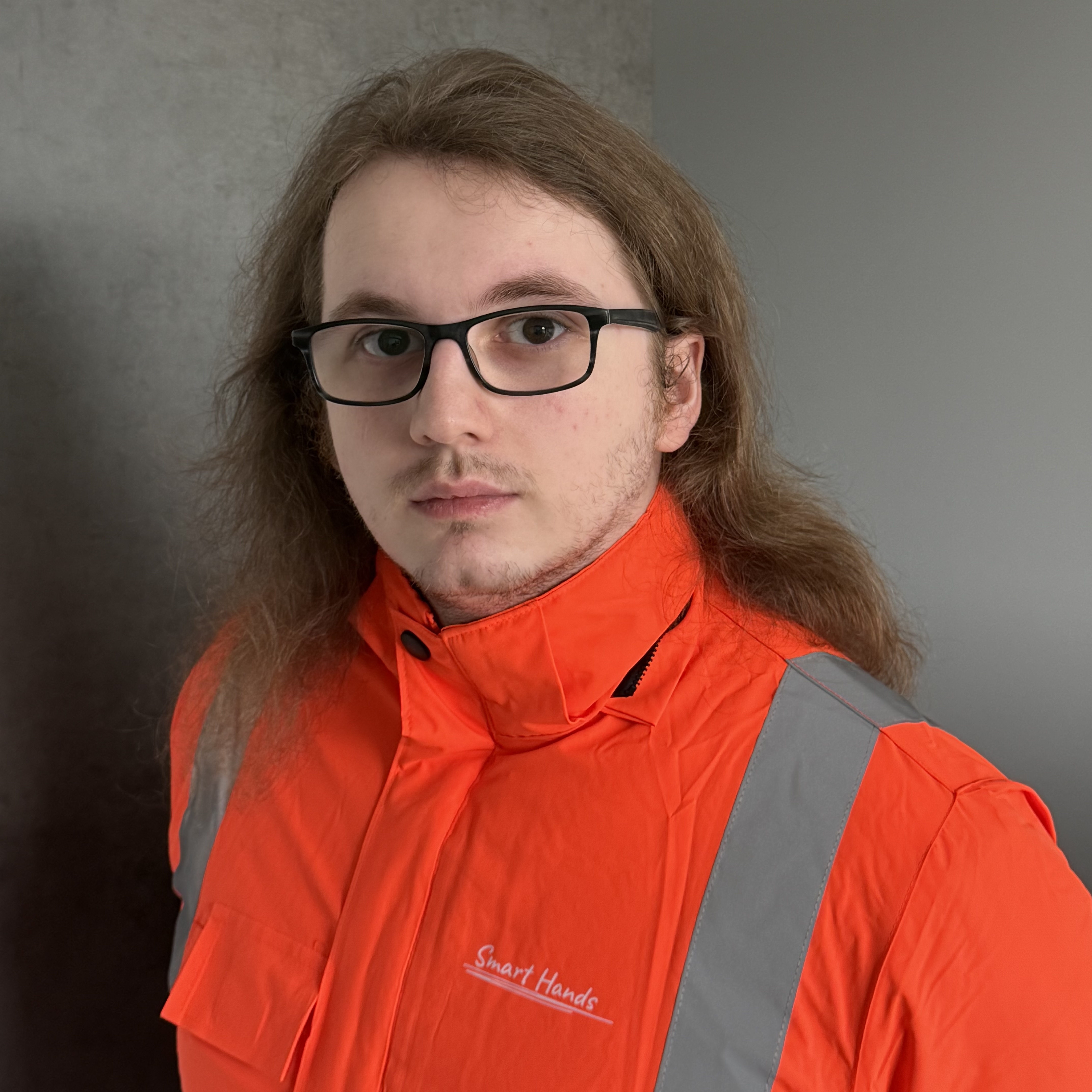
Smart Hands is built and run by the engineer who started it. Not a sales desk, not a marketplace routing you to whoever's nearest — a Manchester remote-hands operation run by someone who has been sat in the cold aisle of Telehouse North in London until 5am fixing a broken hypervisor migration, feeling exhausted and deflated.
It all started small. After moving to Manchester, I noticed that companies outside the North West needed competent hands on their Manchester kit, and the alternatives were putting their own engineer on a train or trusting a remote-hands desk to send someone who couldn't tell a transceiver from a tea bag. I could do the work, so I started doing it, and built everything else outward from that one job done properly.
And people are liking what we’re doing so far… so other engineers do visits too. What hasn't changed is who sets the standard. The pricing, the Portal, the way a job runs, and the answer when something goes wrong all sit with me, and the people who go to site are chosen and held to how I'd do it myself — not selected at random for the lowest price from Fiverr.
Why it works the way it does
The rate is flat. £95 an hour, the same at 2am as at 2pm, billed in whole hours with a 10-minute buffer either side, and no VAT (yet). There's no out-of-hours surcharge, because the work at 2am is the same work, and I'd rather you could predict the bill than be surprised by it. I've been on the receiving end of invoices padded with line items that exist only to make the total bigger, and I decided early I wouldn't send those.
Work runs through the Portal, purpose-built to suit the way work happens. You raise a Work Order, you watch it move, you see check-ins and check-outs from site in real time. "Ring us and we'll sort it" is precisely how visibility disappears, and visibility is most of what you're buying when the kit is 200 miles away and you can't see it yourself.
None of that is a feature list I inherited. Those are features produced through necessity, and which constantly evolve to reduce friction.
What's built so far
The foundation… a Remote Hands operation which you can depend on
I’ve built a circle of trusted IT engineers who have actually done the engineering bit, and understand how all the moving parts fit together. I know that I could pick any one of them to go to just about any job and they’d smash it. But knowing is not good enough, so checks and balances exist to ensure that the work conducted is to a suitable standard and that both sides of the table (you, the customer, and us, Smart Hands) are happy with the outcome.
Engineers can be sent to multiple sites across Manchester and the North West for a single Work Order, and they actually speak to one another. You’re not dealing with 3 different service desks plus a random engineer in an office building somewhere when you’re trying to figure out why a circuit is broken. You just work with one team of engineers who speak your language and confer amongst themselves to diagnose your faults.
The collaboration… Smart Hands Portal and iOS App
It’s all well and good having a team you can submit work to, but what about when you start having a lot of work happening all at once? Many MSPs are supporting tens, dozens, or even hundreds of sites. They’re bound to have something go wrong eventually, and sometimes the person managing a fix goes off on their annual holiday or ends up unwell after trying to cook for the first time in 6 months. So I built the Smart Hands Portal to encourage collaboration within teams, allowing anyone with access to communicate with Smart Hands and track the progress of the various Work Orders in flight.
The iOS app just gives that same visibility on the go… and yes, there are eventual plans for an Android app. But priorities, y’know? :-)
The “Spare Parts” cost savings
Something I noticed over the years is that it doesn’t matter which environment you work in, you need spares which can be deployed quickly should something break. That could be a network switch, an access point, or some other part which has a lead time of 3 weeks and costs £20,000 each time you need it.
Can you guess what a lot of teams do to cover themselves in these situations? Well, they buy a few more switches to put one at each of their sites so that fixing is a mere swap away. And that’s fine. Until each switch ends up being a £5,000 purchase (or more, if you’re running some big-boy Cisco kit).
To solve all of these problems, at least in Manchester, I introduced Smart Hands Warehouse. You pay a small fee to store your spare kit, but now you don’t need to drop thousands on spares for each colo or office. You just need a small number of spares stored centrally with Smart Hands and you can send us out with your kit when something is broken. Easy.
Everyone loves a discount
We came up with Smart Hands Retainers for the teams who use us a lot. The concept is simple, really. No SLA attached yet, but if you’re booking a bunch of work each month then you can pay a fixed monthly fee to get a set number of hours at a discounted rate each month, with a discount on any overages beyond that.
Basic deliverables with every single visit
Every single visit either comes with deliverables you’ve requested, such as rack audits or site surveys, or a Visit Completion Report detailing what the condition on arrival was, what happened, and how it looked at the end, plus any follow-ups recommended. You literally cannot be in the dark that way, and it’s system-enforced documentation. We cannot mark a Work Order as completed unless all the necessary work has been done and documented.
Where it's going
The direction is the same job, widened. The Portal and the app keep getting stripped of unnecessary clutter and friction. Urgent Work Orders trigger alarms to the team, because a 2am outage can't just sit there untouched for hours.
The ambition reaches past Manchester — UK-wide, and, in time, perhaps beyond it. But it grows with the client base, and only as fast as I (and we) can extend it without losing the two things that make it worth using: low friction, and the same standard on every visit, whoever turns up. Growth that costs you either of those isn't worth having, so I won't chase it for its own sake.
I'm not going to pretend that a five-year plan exists. The honest version is that I'm building the service I'd want to hire if the kit were mine and it were at the wrong end of the country, and that I am listening and adapting to feedback as it comes, to ensure that the service I found myself dreaming of at 5am is actually what gets built, with all the nice bits around it.
You can help us!
I’d absolutely love any support you could offer. Whether that’s trying us out (even just for an hour) and giving us some feedback, engaging on our socials, or suggesting us when a friend is in need. In the words of a popular supermarket… every little helps.
Share
XLinkedInAbout the author
Comments
1 Comment
📌 Pinned
P.S. Welcome to the new Smart Hands Blog!
I'd never spam you for it, but I'd really appreciate any support on the Smart Hands LinkedIn page. Marketing is not my strong suit, but all the technical stuff sure is!
You can also connect with me directly here.